
Leak Detection and Tile Repairs
The inspection checks broken, slipped or poorly fixed tiles and follows likely water paths around valleys, ridges, vents and abutments.
Serving Telford & surrounding areas
Reliable repairs for pitched and flat roofs, with a careful inspection, a written breakdown of the work and clear pricing before work begins.
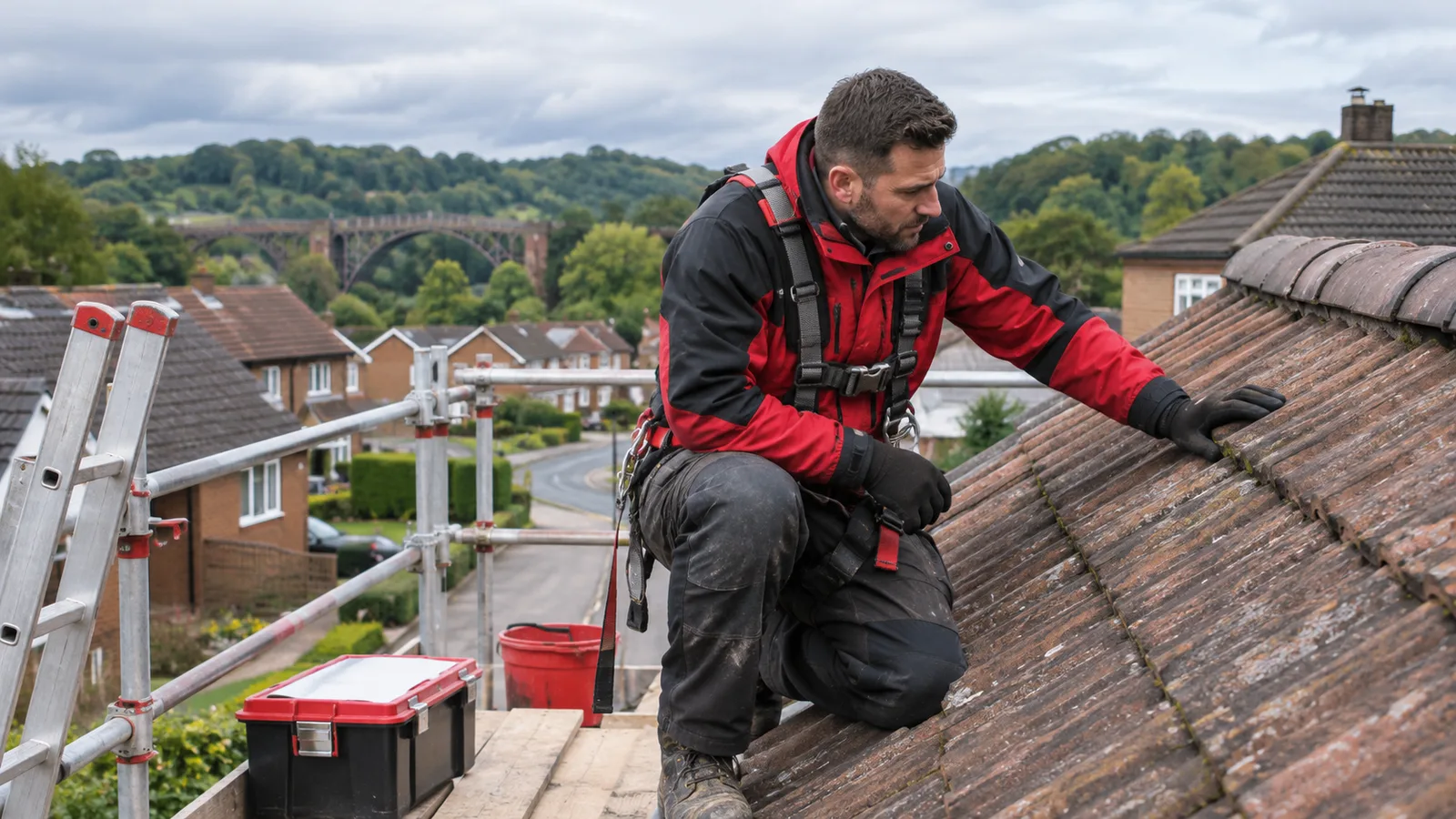
When water is getting in or part of a roof looks damaged, the first job is to identify the actual entry point. Telford roofers should inspect the covering, flashings, ridges, valleys, abutments and gutters and downpipes before recommending work. A damp patch inside does not always sit directly beneath the external defect because water can travel along felt, battens or rafters.
Telford Roofers works on pitched and flat roofs across the local area. Typical jobs include replacing slipped or broken tiles, repairing lead flashing, renewing failed mortar, tracing leaks, dealing with damaged underlay and repairing flat roof coverings. If isolated repairs are no longer economical, the inspection can also establish whether a larger renewal is the sounder choice.
Telford includes housing of different ages and roof forms. Established areas such as Wellington and Dawley include older roofs where previous patch repairs, mortar wear and ageing underlay may need close attention. Newer housing around Lawley commonly has more recent tiled systems, but storm damage, slipped tiles and detailing around roof penetrations can still cause faults. Properties in Ironbridge may have steeper access, older materials or conservation considerations, so the survey and proposed method need to suit the individual building.
For a broader look at the work available from a roofer in Telford, including planned roofing projects as well as repairs, the right starting point is a clear assessment of the roof's present condition.
A good repair deals with the defect and the route water has taken, rather than covering the visible symptom. On a pitched roof, that may mean lifting tiles to inspect battens and membrane, replacing damaged units with compatible tiles, and reinstating them with the correct fixings. Leadwork at chimneys and wall abutments may require local dressing, a new flashing detail or more extensive renewal if splits and failed joints are widespread.
Ridge and hip problems also need a close inspection. Loose mortar can allow movement and water entry, but repointing an unstable ridge may provide only a short-lived result. Depending on the condition and roof design, rebedding or a compatible dry-fix system may be more suitable. Valleys must remain clear and correctly lined because they carry concentrated rainwater from adjoining slopes.
Shropshire's regular rain and periods of strong wind can expose small defects quickly. A displaced tile, split flashing or blocked outlet may allow repeated wetting of the roof structure. Prompt investigation helps limit damage to insulation, plaster and timber, although the condition beneath the covering cannot be confirmed until access and inspection are possible.
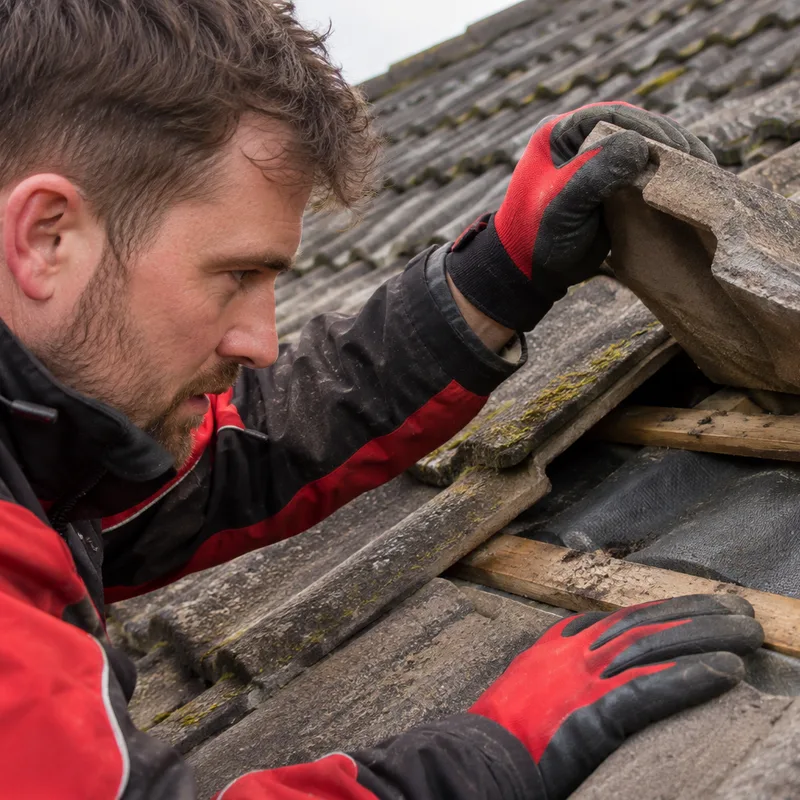
The inspection checks broken, slipped or poorly fixed tiles and follows likely water paths around valleys, ridges, vents and abutments.
Flashings, soakers and mortar joints are checked for splits, lifting and failed seals. The repair method depends on how much sound material remains.
Loose components and deteriorated bedding are assessed before repointing, rebedding or dry-fix work is proposed.
The survey checks seams, laps, upstands, outlets and roof edges, as well as signs of trapped moisture or movement beneath the covering.
Blocked or damaged gutters can send water onto walls and roof edges. Outlet capacity, joints, falls and visible fixing defects are considered.
Where defects are extensive, options may include renewing the covering, battens and breathable membrane rather than continuing with repeated patches.
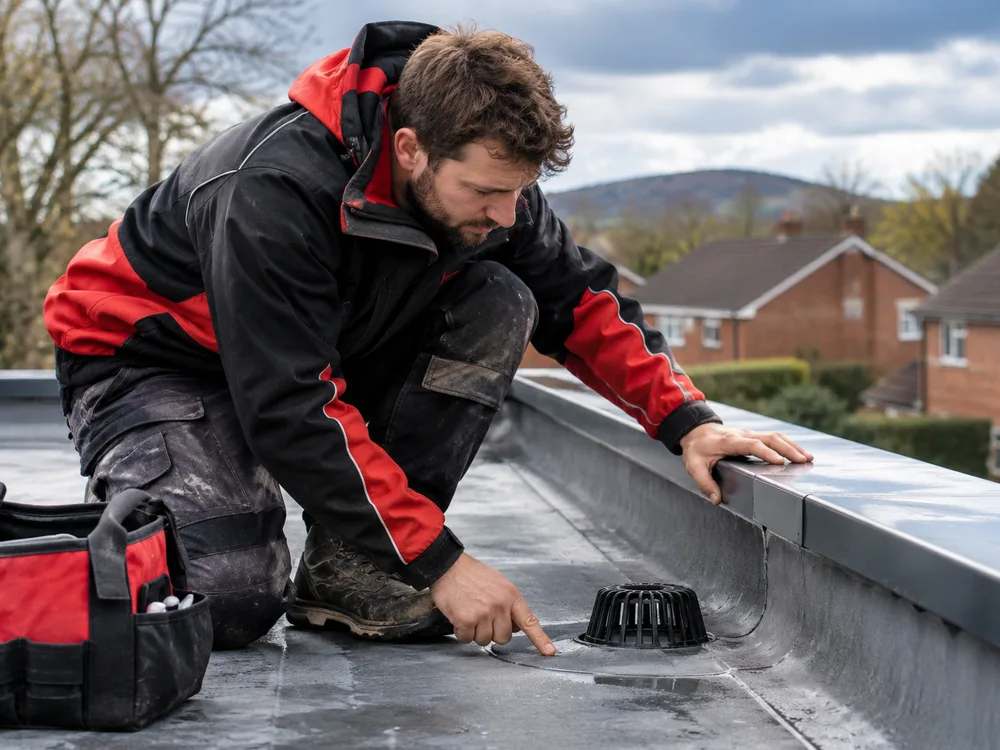
Flat roofs rely on sound detailing at every junction. The covering should drain towards an outlet or edge, while upstands and perimeter trims must stop wind-driven rain reaching beneath the membrane. Common trouble points include open laps, splits around penetrations, failed edge details and outlets obstructed by leaves or silt.
The existing material determines the repair. Built-up felt can sometimes be prepared and patched with a compatible torch-applied or cold-applied system. EPDM rubber repairs require suitable primers, tapes and uncured flashing materials. GRP fibreglass faults may involve cleaning and abrading the surface before compatible resin and reinforcement are applied. Mixing incompatible materials or coating over a damp substrate can lead to early failure.
Ponding water needs investigation rather than a surface patch alone. Limited standing water does not automatically mean the whole roof has failed, but persistent pooling may point to inadequate falls, deck movement or a restricted outlet. If the deck is soft or moisture has spread through the build-up, local repair may not be economical. The inspection should establish whether a targeted repair, partial renewal or complete replacement is appropriate.
Roof repairs in Telford typically cost about £150 to £500 for a small accessible tile or flashing repair, while more involved leadwork, ridge work or flat roof repairs may range from £500 to £2,000 or more. Scaffolding can add substantially to the total. Final pricing depends on access, roof height and pitch, materials, the extent of hidden damage and whether matching tiles are available. Your exact cost is confirmed after the roof inspection and written breakdown of the work.
Book Your Free InspectionShare where damp has appeared, when it is most noticeable and whether tiles, flashing or debris are visible from ground level. Photos can help with initial planning, but they do not replace a roof inspection.
The relevant slopes, junctions and drainage points are checked using safe access. Where appropriate, the roof space is examined for staining, daylight, wet insulation and timber damage.
The proposed work should identify the defect, materials and access requirements. Any limitations, such as concealed damage that may become apparent after lifting the covering, should be discussed before work starts.
Damaged materials are removed as needed, the underlying area is checked, and compatible components are fitted. Work areas and rainwater outlets are left clear of repair debris.
The completed detail is checked, and any relevant findings about surrounding roof areas are explained so future maintenance can be planned.
A useful roofing quote should explain what is being repaired, why that method has been selected and what access is required. Compare the scope rather than looking at the total alone. One quotation may include scaffold access, replacement underlay and new battens, while another may cover only a surface patch. Those are different jobs even if both are described as leak repairs.
Ask whether the materials are compatible with the existing roof and how concealed damage will be handled. For tiled roofs, this may include the availability of a close tile match and the condition of the battens beneath. For flat roofs, it includes the type of membrane, the state of the deck and whether the roof has adequate falls. Chimneys and party-wall abutments may also affect the method and access plan.
Older or altered properties need particular care. Ironbridge Gorge is a UNESCO World Heritage Site, and some properties in and around the gorge are subject to conservation controls. Listed building status or conservation area requirements can affect changes to roof materials and details. Property owners should confirm whether consent is required with Telford & Wrekin Council before approving work that changes the roof's appearance.
Clear communication matters when weather affects the schedule. Some roofing materials need a dry substrate, and opening a roof immediately before heavy rain is poor practice. A responsible plan allows for forecast conditions, temporary protection when required and a realistic completion window.
Arrange an assessment to identify the cause of the problem and receive a written breakdown of the work with pricing suited to your roof.
Call for a Free EstimateThe timescale depends on safety, weather, access and material availability, but active leaks should be assessed promptly. A small repair may be completed during one visit when the defect is clear and suitable materials are available. Scaffold access, specialist tiles, leadwork or a wet roof deck can extend the schedule. Temporary weather protection may be appropriate when a permanent repair cannot be completed safely at once.
Yes, a flat roof can often be repaired locally when the defect is confined and the surrounding covering and deck remain sound. Suitable methods differ for felt, EPDM and GRP systems. Widespread blistering, saturated insulation, soft decking or repeated failure across several details may make renewal better value than another patch.
Access and the extent of damage usually have the greatest effect on the final price. Roof height, pitch, scaffolding, leadwork, tile availability, flat roof material and hidden deterioration beneath the covering all matter. A written quote should state whether access equipment, waste removal and associated materials are included.
A loft inspection is useful when safe access is available because staining, wet insulation and timber marks can help trace the route of water. It does not replace an external inspection. Condensation can also create dampness inside a roof space, so ventilation and moisture patterns should be considered before assuming the covering is leaking.
Like-for-like maintenance may not need permission, but listed status and conservation controls can affect changes to materials, roof form and visible details. Parts of Ironbridge Gorge have important heritage designations. Owners should check the property's status and confirm requirements with Telford & Wrekin Council before authorising alterations.
Yes, a slipped or broken tile should be investigated before repeated rain reaches the underlay and battens. The tile may have moved because of failed fixings, damaged nibs or a problem with the supporting batten. Refitting it without checking the cause can leave the same weakness in place.
Roof work should proceed only when conditions allow safe access and the selected materials can be installed correctly. Strong wind, rain, frost or a saturated substrate may require rescheduling. Telford's changeable weather should be allowed for when planning exposed repairs, particularly work involving membranes, resins or opening larger areas of the roof.
Tell Telford Roofers what you have noticed and arrange an inspection. You will receive practical advice on the repair options, access requirements and likely cost before work is agreed.